 Tulum City Guide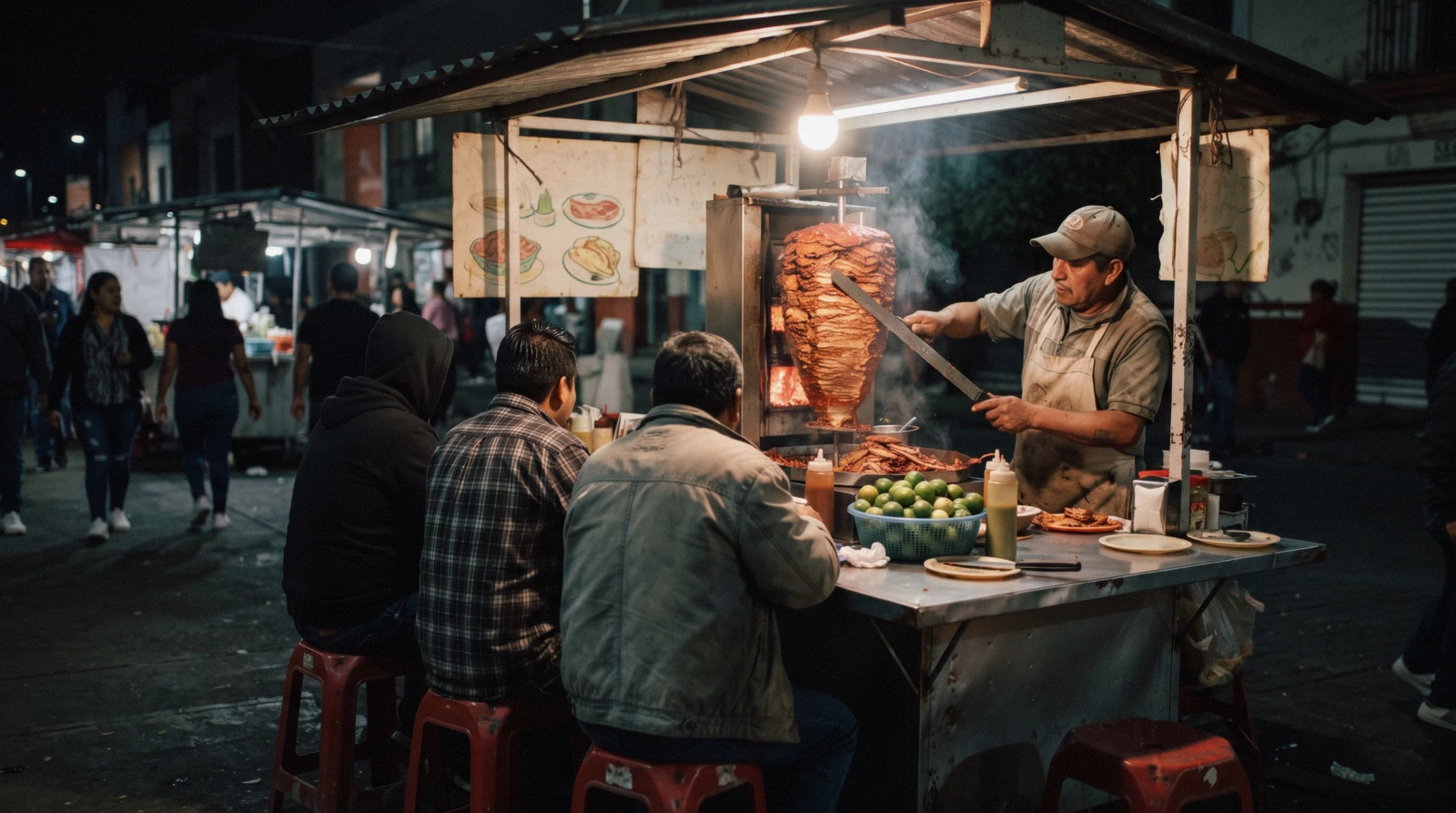
Where to Eat in Tulum
Tulum restaurants come in two entirely separate versions, four kilometres apart. In the town you eat where the people who work on the beach road eat: taquerías, cochinita in the morning, marquesitas at night, for a fraction of the strip's prices. Behind the dune the same evening is a tasting menu with a wine pairing, often excellent, priced for a different visitor. Neither is a trap; they are different products. The rest of the trip is in our guide to things to do in Tulum.
Quick answer The two scenes, what to order, and how to pay
Eat breakfast and lunch in the town: cochinita pibil before eleven, tacos al pastor from the evening spits, marquesitas from a cart. Save the beach road for one dinner if you want it. Carry pesos in cash for the town end and the markets; the strip takes cards. Tap water is not drinkable anywhere.
Key takeaways
- The four kilometres between the two ends is the single biggest factor in what a meal costs here — where to stay explains why the strip's supply chain is expensive
- Order the regional things rather than the international ones: cochinita pibil, panuchos, salbutes, sopa de lima, marquesitas
- Cash, in small notes, for anything with a counter and a spit; the same rule that applies at the cenote gates
- This site names dish types and streets, not individual restaurants — why is at the bottom of the page
The town against the beach road
Both are real, and the difference is structural rather than snobbery: the strip generates its own power, trucks in its water and pays beach-road rents. This is what that means at a table.
| Tulum pueblo | Beach road | |
|---|---|---|
| What it is | Working town: taquerías, loncherías, market stalls | Designed restaurants, tasting menus, bar programmes |
| Typical spend | A fraction of the strip for the same volume of food | Priced in dollars in practice, if not on the menu |
| Payment | Cash, small notes; some cards | Cards everywhere |
| Booking | Walk in | Book, especially in high season |
| Best for | Breakfast, lunch, late tacos, every day | One dinner, if that is your trip |
One practical consequence: eat in the town and you can do it every night without thinking; eat on the strip and it becomes the budget line that decides everything else, including whether you can afford the gates. For scale: the four biggest gates on this coast — MX$265 at the ruins, MX$400 at Dos Ojos, MX$225 for the reserve quota and MX$210 at Cobá — come to MX$1,100 together, about $65.
What to order in the Yucatán
This coast has its own food, and it is not the taco canon most visitors arrive with.
Cochinita pibil — pork marinated in achiote and bitter orange, wrapped and cooked slowly, served in tacos or tortas with pickled red onion and habanero. Traditionally a morning dish; the good places sell out before noon.
Panuchos and salbutes — fried tortillas, one stuffed with beans and one not, topped with turkey or chicken, onion and avocado. The everyday Yucatecan snack.
Sopa de lima — turkey broth with lime and crisp tortilla strips. Sounds slight, is not.
Tacos al pastor — the evening spit, everywhere, and the thing to eat late.
Marquesita — a rolled crisp crepe with cheese and Nutella or cajeta, sold from carts at night. Absurd and correct.
Ceviche and aguachile — the coast's own, and the thing to eat at lunch by the water.
- Morning — cochinita pibil, huevos motuleños, fruit and a licuado
- Lunch — ceviche, aguachile, sopa de lima, panuchos
- Evening — tacos al pastor from the spit, then a marquesita from a cart
- To drink — agua de jamaica or horchata; the local beers are cold and cheap in the town
Where to look in the town
Streets rather than names, because the individual places turn over fast and we do not eat at them on your behalf.
Avenida Tulum, the main street, has the visible, easy options — a mix of good and tourist-priced, and the ones with a queue of locals at eight in the morning are the ones to try.
The streets one block back, east and west of the avenue, are where the loncherías are: small, family-run, comida corrida at lunch, the menu on a board rather than printed.
The market area near the centre is the breakfast option: fruit, juices, cochinita, and prices that make the beach road look like a different country.
Carts at night, especially around the main crossroads: marquesitas, elotes, tacos. Cash only, and a queue is a recommendation.
Vegetarian and vegan
Tulum is unusually easy for both, at both ends. The town has vegetarian loncherías and juice bars; the beach road has a well-established plant-based scene aimed at the wellness trade. The Yucatecan staples themselves are meat-heavy, so the vegetarian version of this coast is mostly modern rather than traditional — worth knowing if you came for the regional food specifically.
The beach road, and what you are paying for
The strip's kitchens include genuinely serious restaurants, and it is worth being clear-eyed about the economics behind them.
Several of the beach-road restaurants cook at a standard that would hold up anywhere, with wood-fire kitchens, local seafood and long tasting menus. The setting — sand, candlelight, jungle — is a real part of the product.
The price reflects a supply chain that includes generated power, trucked water, staff commuting four kilometres from town, and rents on the most expensive strip in the state. It is not a mark-up applied cynically; it is what a restaurant costs in that location.
If you want one such dinner, book it — the kitchens are small and fill by seven in high season. If you want it every night, the arithmetic changes the shape of the trip, and the fees page shows what the same money buys at the gates.
Water, cash and the practicalities
Four things that come up at every table on this coast.
Water. Tap water is not drinkable in Tulum. Restaurants and hotels serve and refill from garrafones; carry a refillable bottle, which every park also asks for.
Ice. In established places it is made from purified water and is not a problem. At a cart, use your judgement.
Cash. The town end and the carts want pesos, in small notes. The beach road takes cards. Draw money in the town — the machines on the strip charge more.
Tipping. Ten to fifteen per cent is normal where service is not already added; check the bill for propina incluida before adding to it. Peso figures on this site convert at US$1 = MX$16.95, the ECB rate of 28 August 2026.
Timing. The town eats late and the beach road books early. Nothing much is open for breakfast on the strip before eight, while the town's market is going at seven.
Why this page names no restaurants
Every other page on this site prints prices with the date they were read. Restaurants are where that method stops working.
A restaurant's quality is a moving target — a chef leaves, a lease changes, a place that was excellent in March is ordinary by October — and we do not eat in Tulum on your behalf. Publishing a ranked list of names we have not tested, from reviews we cannot verify, would be the one thing on this site that was not checked.
So this page does what it can stand behind: the structure of the scene, what the regional dishes are, which streets to walk down, how payment works, and why the two ends of town cost what they do. For names, use the map on your phone at the hour you are hungry and follow the queue of people who live here. That is the same advice we would give a friend, and it is the only food recommendation that survives a year.
Where this connects
Food, sleep and transport are one decision in Tulum.
Where to stay
Staying in the town puts the cheap food outside your door; the strip puts the expensive kind. The where-to-stay page prices both.
The same four kilometresBeach clubs
A club table is often just lunch at menu price, without the bed. The beach-clubs page explains how minimum consumption works.
Lunch with a minimumGetting around Tulum
The ride home from the strip after dark is the most expensive fare in Tulum. The getting-around page covers the alternatives.
Dinner logisticsEating in Tulum: what people ask
Is food expensive in Tulum?
On the beach road, yes — the supply chain and the rents make it so. In the town, no: the same volume of food costs roughly a third as much, and it is where the people who work on the strip eat. The comparison above sets out why the gap exists.
What food is Tulum known for?
Yucatecan cooking rather than generic Mexican: cochinita pibil, panuchos and salbutes, sopa de lima, and on the coast ceviche and aguachile. Late at night it is tacos al pastor from the spit and a marquesita from a cart — what to order has the full list.
Can you drink the water in Tulum?
No. Tap water is not drinkable; restaurants and hotels serve purified water from garrafones, and every park asks you to carry a refillable bottle. Ice in established places is made from purified water.
Do restaurants in Tulum take cards?
On the beach road, yes, everywhere. In the town, some do and the carts and small loncherías do not — carry pesos in small notes, the same rule that applies at the cenote gates.
Is Tulum good for vegetarians and vegans?
Unusually good at both ends: juice bars and vegetarian loncherías in the town, and a well-established plant-based scene on the strip. The traditional Yucatecan dishes themselves are meat-heavy, so the vegetarian version here is mostly modern cooking.
Do you need to book restaurants in Tulum?
On the beach road in high season, yes — the kitchens are small and fill by seven. In the town, no: you walk in, and the queue outside a taquería at eight in the evening is the recommendation.
Prices, hours and terms are set by the venue or operator and confirmed at checkout.
We may earn a commission if you book through one of our links, at no extra cost to you. Full affiliate disclosure