 Tulum City Guide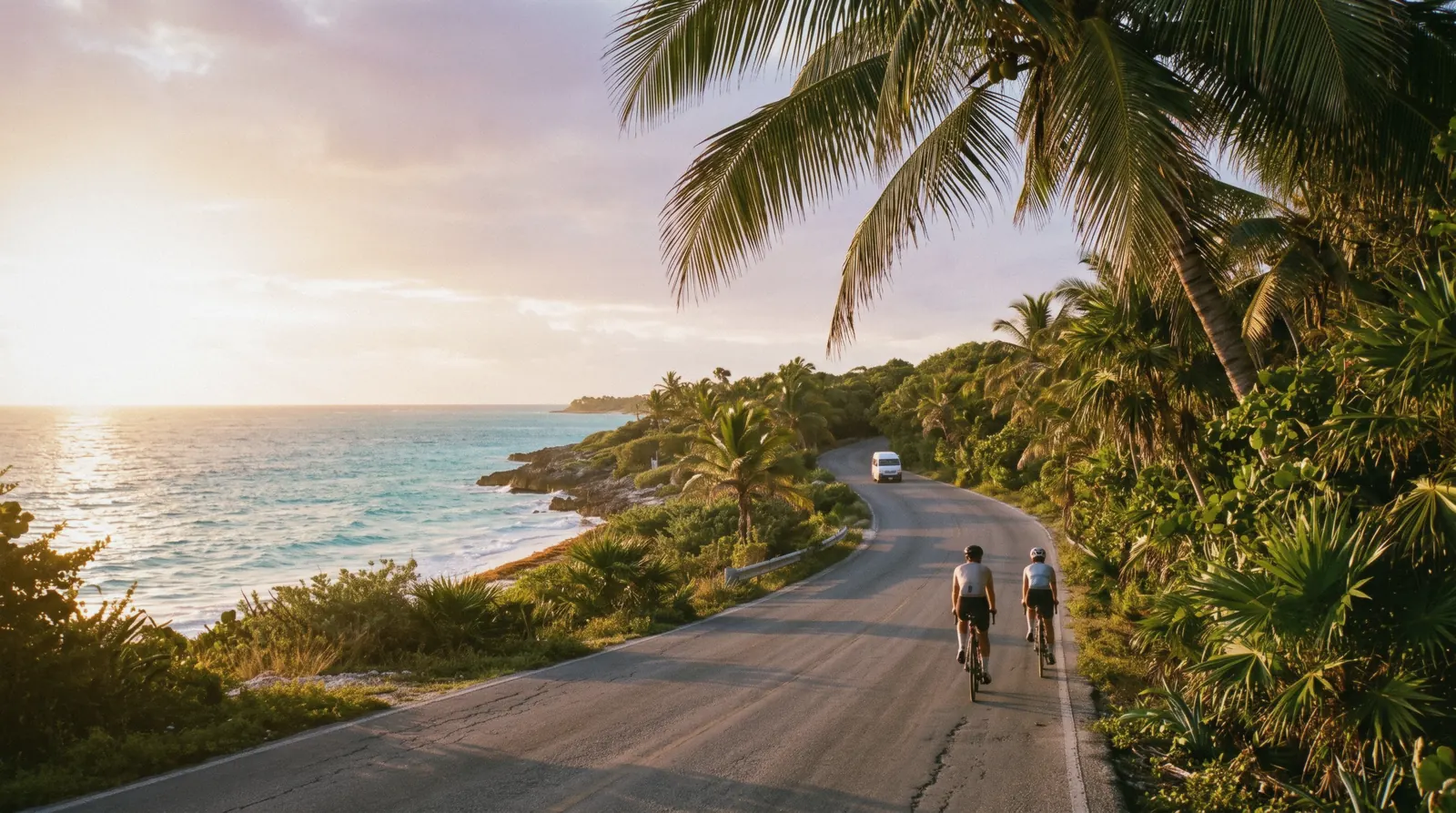
Things to Do in Tulum
The things to do in Tulum sit on one 60-kilometre line, and the useful question is not which is best but what each one costs you in pesos, hours and road. This page numbers twelve of them to a map, marks which publish a price and which take cash at a hut, and says plainly which need a guide by law. The homepage puts the same list in trip order in the guide to tours in Tulum.
Quick answer The short list, the money, and what needs booking
Four things carry a first visit: the walled Maya city on the cliff, a cavern cenote, a day in the Sian Ka'an reserve, and an hour in the sea over the reef. Everything else on this page is a variation on one of those. Gate prices run from free to MX$400, most of them cash only, and almost nothing needs to be booked in advance.
Key takeaways
- Cheapest big day out: the Tulum ruins at MX$265 for a foreign adult, in one unified payment at the gate
- The two activities capped by law — the Akumal turtle circuits and the Sian Ka'an float — are the only ones worth booking days ahead
- Free, and better than it sounds: the public beaches under the ruins, the town's own streets in the evening, and the road out to the Cobá-road cenotes on a bicycle
- For a rainy or weedy week, go inland: the cenotes and Cobá do not care about sargassum or an afternoon downpour
Twelve things to do around Tulum, numbered to the map
Grouped by where they are rather than by how famous they are, because the road is what eats the day. Prices are the gate prices on the operators' or agencies' own pages. Where a place publishes nothing, the row says so. Times are our own estimates of how long the visit takes, not including the drive.
On the coast at Tulum
-
Tulum ruins
Archaeology MX$2651–1.5 h
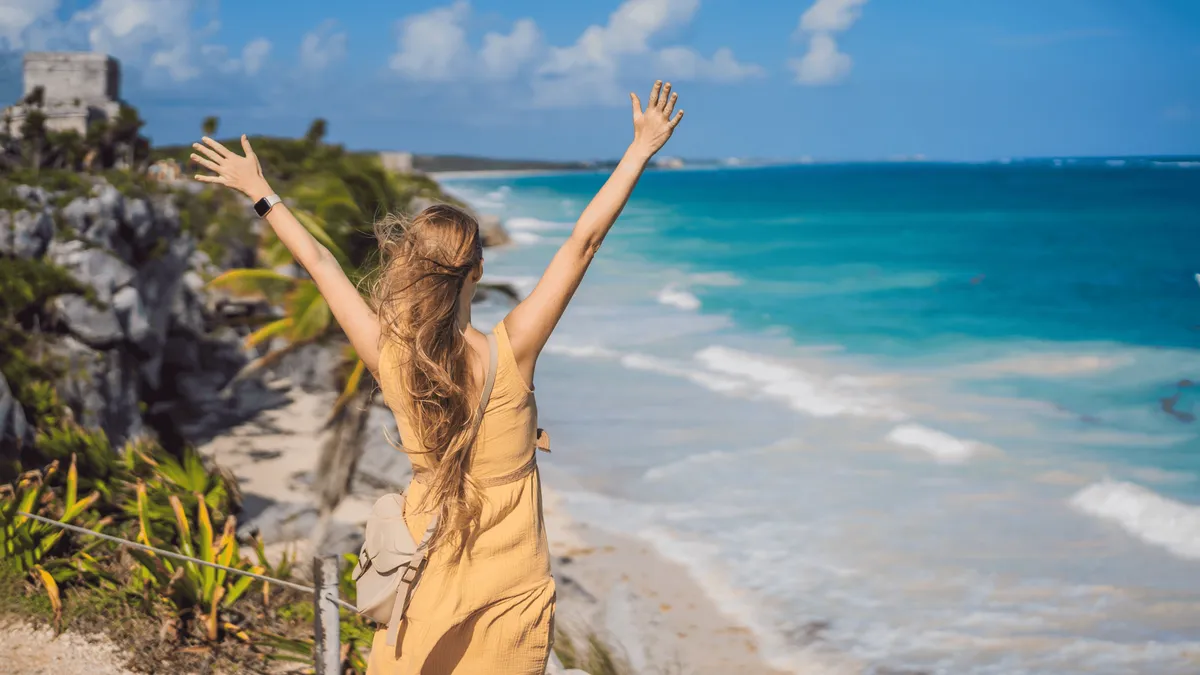
The only walled Maya city built on a Caribbean cliff, and a compact one — an hour covers it. One unified fee now replaces the three charges most guides still print.
Tip: Gate at 08:00. There is no shade inside the walls and the coach parties arrive mid-morning.
-
The public beaches
Beach FreeHalf a day
Playa Paraíso and the sand under the cliff line are public, free and have no minimum spend — which the beach clubs further down the road do.
Tip: All Mexican beaches are public by law; what a beach club sells you is a sunbed and a bar tab.
-
Snorkelling the reef
Water About $362 h
The Mesoamerican reef starts a few hundred metres off the beach: two spots in two hours, gear included, straight off the sand rather than out of a marina.
Tip: The cheapest hour in the water near Tulum, and the first to be cancelled in rough seas.
Inland, on the Cobá road and Highway 307
-
Cenote Dos Ojos
Cenote MX$4003 h
Two flooded openings joined by a lit cavern passage on the Sac Actun system. The only cenote near Tulum that publishes prices, takes cards and holds a booking.
Tip: Nicte-Ha in the same park is MX$300 and shallow — the better ticket with small children.
-
Gran Cenote and the Cobá-road cenotes
Cenote Not published2 h
Gran Cenote, Calavera and Zacil-Ha lie within eight kilometres of town on one road — close enough to reach by bicycle before breakfast.
Tip: All three are cash gates that publish no price and no opening time. Carry pesos.
-
Casa Cenote
Snorkel Not published2 h
A brackish mangrove channel running to the sea rather than a hole in the ground, so the water moves and the fish come in from both ends.
Tip: The gentlest water on this coast for a nervous swimmer — open sky, no cave.
-
Laguna Kaan Luum
Lagoon Not published3 h
A wide, warm, waist-deep lagoon with a roped-off cenote shaft at its centre that drops to about eighty metres.
Tip: The closest thing near Tulum to a beach day without a beach club.
Days out, north and south
-
Sian Ka'an
Reserve MX$225Full day
Five thousand square kilometres of mangrove, lagoon and reef, and the float down a canal the Maya cut to move trading canoes.
Tip: The quota is CONANP's and is collected at the gate; only one listing on this site says all fees are included.
-
Muyil
Archaeology MX$14545 min–3 h
Steep-walled Petén-style temples at the reserve gate, with a forest boardwalk that ends at the lagoon where the float starts.
Tip: The quietest archaeological site within an hour of Tulum, and the entrance is on the highway.
-
Cobá
Archaeology MX$2102–3 h
The inland capital this coast worked for: forest causeways, carved stelae and the tallest pyramid in the northern Yucatán, crossed by bicycle or pedalled tricycle.
Tip: Shade the whole way, which is why it beats the coast in the hot months.
-
Akumal Bay
Turtles About $37Half a day
Green turtles grazing seagrass in waist-deep water, inside two marked circuits that by federal rule take six people plus a certified guide.
Tip: Circuits run 09:00–17:00 only, and the daily caps are 256 and 300 people. Take the first slot.
-
Chichén Itzá
Day trip About $9012 h
Two and a half hours each way for the biggest Maya site in the north, usually paired with a cenote swim and an hour in Valladolid.
Tip: A twelve-hour day. Worth it on a longer stay, a poor trade on a three-night trip.
Numbers match the list — tap a pin for the guide.
What each thing costs, and what it costs you in time
The same twelve, sorted by what leaves your pocket at the gate rather than by fame. Peso figures are the official ones. Dollar approximations use US$1 = MX$16.95, and tour prices are GetYourGuide's listed figures.
| Thing | At the gate | Time on site | Needs |
|---|---|---|---|
| The public beaches | Free | Half a day | Nothing |
| Muyil | MX$145 | 45 min–3 h | Cash; a colectivo stops at the gate |
| Cobá | MX$210 | 2–3 h | A car or a tour; no easy colectivo |
| Sian Ka'an | MX$225 quota (about $13) | Full day | A permit-holding operator, or a car |
| Tulum ruins | MX$265 | 1–1.5 h | Cash or card; arrive at 08:00 |
| Cenote Dos Ojos | MX$400 | 3 h | Card accepted; book online if you want a slot |
| Cobá-road cenotes | Not published — cash | 2 h each | Pesos in cash, and a bicycle or colectivo |
| Akumal turtle circuit | From about $37 guided | 55–65 min in the water | A certified guide, by law |
Two of these cannot be done alone at any price: the Akumal circuits require an authorised guide under the bay's federal protection programme, and the Sian Ka'an float is run by permit-holding cooperatives. Everything else on the list you can walk up to.
The tours that cover several of these in one day
Where a single booking replaces three cash gates and a taxi. Prices are GetYourGuide's listed figures.
 from $26.09
Riviera Maya: Tulum Ruins, Mariposa & Chen-Ha Half-Day Tour
The cheapest way to pair the ruins with two cenote swims — hotel pickup, a guided walk, then Mariposa and Chen-Ha. Biggest review count here.
Check Availability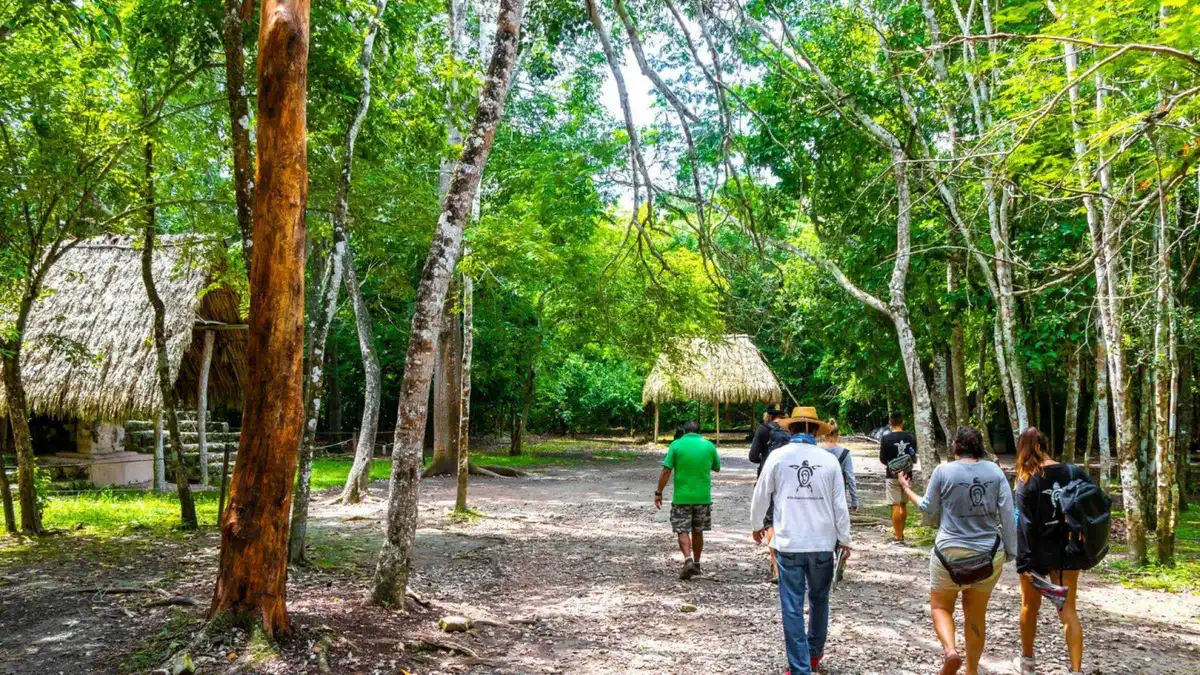 from $45
Riviera Maya: Tulum, Coba & Cenote Tour: Transport & buffet
Two archaeological zones and a cenote swim in one day with hotel pickup and a buffet — the cheapest full day on this page.
Check Availability from $174.94
Riviera Maya: Sian Ka'an Reserve Ancient Maya Canals Tour
Run by the Maya cooperative that holds the permit: the float down the thousand-year-old canal at Muyil, four ecosystems, breakfast on the early departure.
Check Availability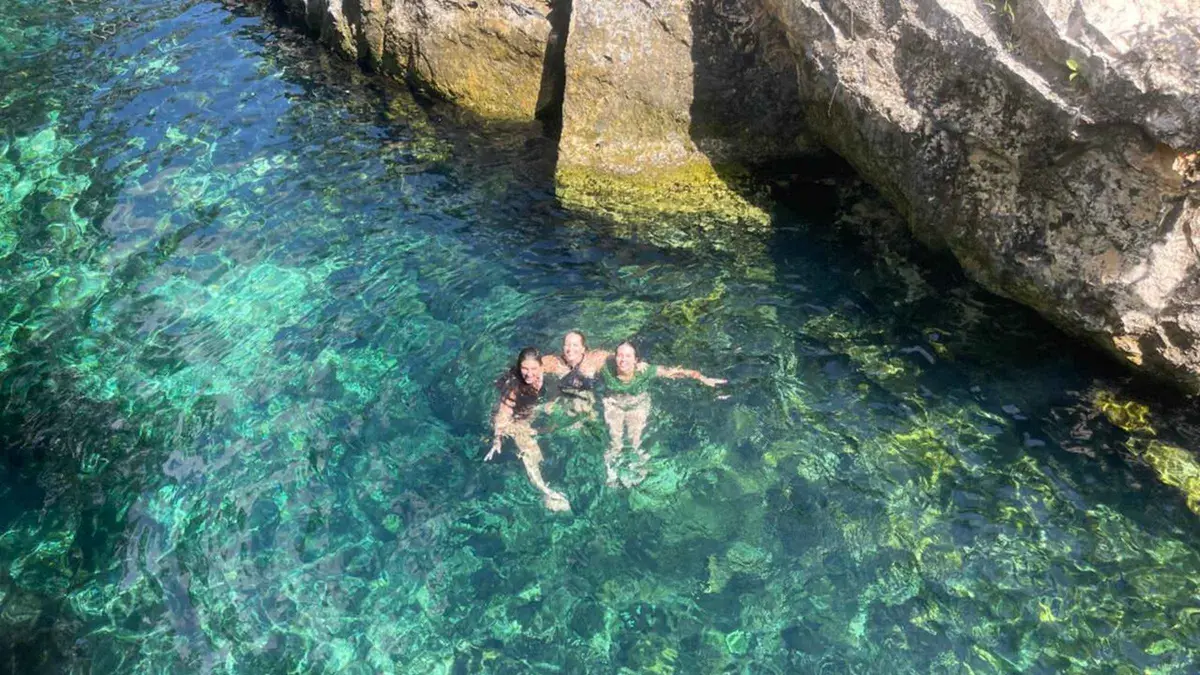 from $165
Tulum: Cenote Exploration Tour with Lunch and Snorkeling
Three cenotes in one afternoon with transport, life vests and a traditional lunch — one booking instead of three cash gates and a taxi.
Check Availability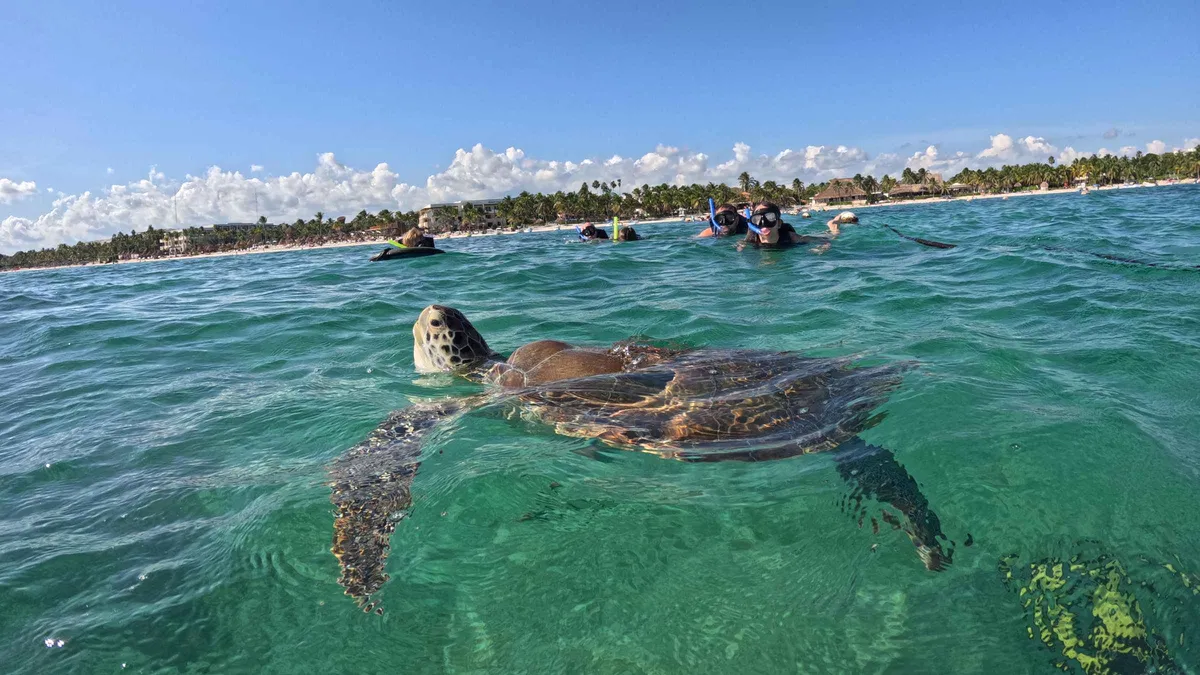 from $37.39
Akumal Beach: VIP Sea Turtle Swim, Guided Snorkeling + GoPro Photos
Wristband entry, a local licensed guide, lockers and GoPro photos. Book the first slot: the bay is calmest and the guides put fewer people in.
Check Availability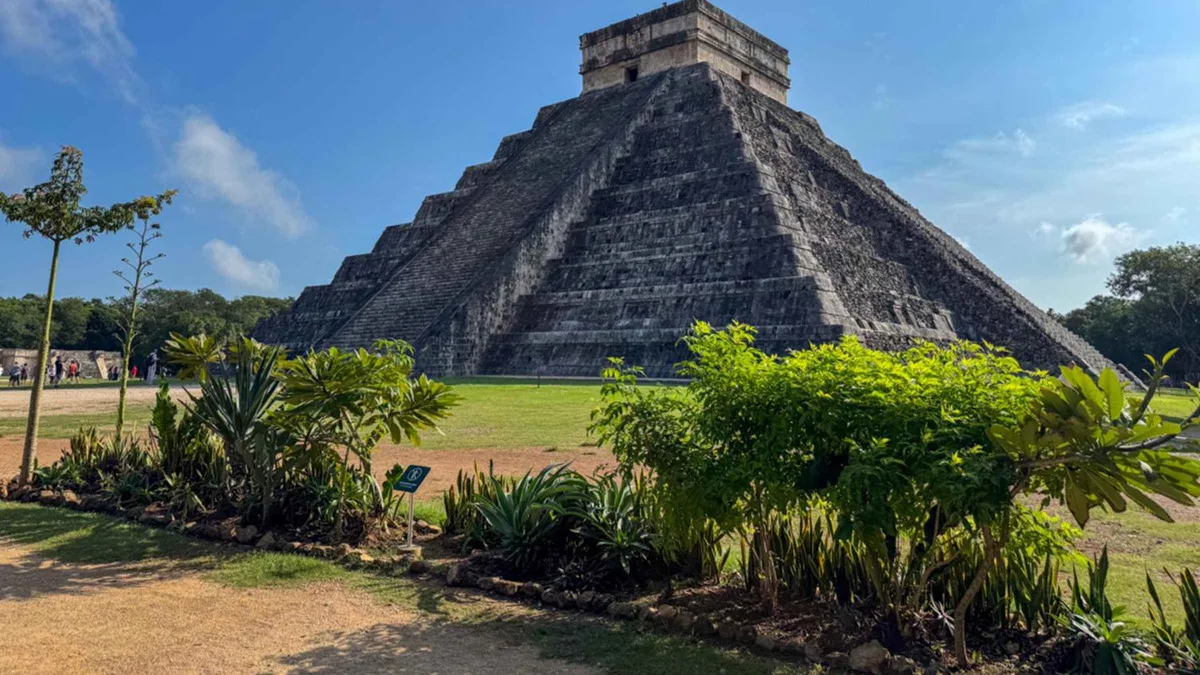 from $90
From Tulum: Chichen Itza, Cenote & Valladolid Tour
The long day inland — Chichén Itzá, a cenote swim and an hour in Valladolid, with buffet lunch and pickup. Twelve hours door to door.
Check AvailabilityPrices, ratings and details are the platform's own. Dollar figures are the listed prices. The platform bills in your account's currency.
The water: reef, cenote or lagoon
Three different swims sit within half an hour of the town, and confusing them is the most common way to waste a morning.
The reef is the Caribbean: warm at 26 to 30 °C, salty, and alive with fish, rays and turtles. It sits a few hundred metres offshore, so you either swim out with a guide or take a boat. It is also the swim most affected by weather and by sargassum in the warmer months.
The cenotes are groundwater at about 24 °C, fresh and glass-clear, and they are indoors in the sense that matters: no wind, no weed, no waves. The lagoons — Kaan Luum in the south, the Muyil system inside the reserve — are the third thing again: shallow, warm, and better for floating than for looking at anything.
If the sea is rough or weedy, the cenotes are unaffected. If you want animals rather than rock, the reef or Akumal. If you want to lie in warm water and do nothing, the lagoon.
What is free, and what only looks free
Tulum has a reputation for being expensive that the gates do not support and the beach road does.
Free: every beach in Mexico, by law, including the sand under the ruins. The town's own streets in the evening, where the food is a third of the beach-road price. The cycle path out to the Cobá road. The lagoon views from the Muyil boardwalk cost the price of the ticket and nothing more.
Not free, though often presented as such: a beach club, which charges a minimum consumption rather than an entry fee and expects it to be spent on drinks; the photograph in front of the sculpture on the beach road, which sits on private hotel land; and parking almost anywhere on the beach strip. The gap between the two lists is the whole reason the fee table on the homepage exists.
Tulum after dark, and what the town does at night
Almost every list of things to do in Tulum stops at sunset, which misses the half of the place where people actually live.
The town end wakes up around seven. Avenida Tulum and the streets behind it fill with taco stands, marquesita carts and small kitchens that were feeding the people who work on the beach road an hour earlier. This is the cheap, good, unglamorous version of eating here, and it runs until late.
The beach road is the other thing entirely: bars and restaurants that price in dollars, several of them genuinely excellent, most of them running on generators. What neither end has is a promenade or a night market of the kind other Mexican towns build their evenings around — Tulum's night is either a table or a dance floor.
One caveat worth knowing: the four kilometres between the two are unlit for most of their length, and taxis have no published tariff, so the fare home from the beach road at midnight is whatever is agreed at the kerb. Agree it before you get in, and carry cash.
Stargazing and the night sky
Away from the two lit strips the sky here is genuinely dark, and the beach south of the hotel zone is the easiest place to see it. Turtle nesting season complicates that: the national park asks visitors to keep torches and phone lights off the sand at night in the nesting months, because hatchlings navigate by the horizon and a white light sends them inland. If you want a night walk on the beach, that is the rule that matters.
The other Tulum: yoga, temazcal and the wellness trade
A large part of what is sold here is not a place at all but a practice, and it is worth knowing what is what before you pay for it.
Yoga studios and retreat centres run across both the beach road and the newer residential grids inland, from single drop-in classes to week-long programmes. Prices track the address rather than the teaching: the same class costs a fraction of the beach-road figure two kilometres away in La Veleta.
Temazcal — the pre-Hispanic sweat lodge — is offered by a range of operators, some of them working with Maya practitioners and some of them not. It is a genuine tradition and a physically demanding one: heat, steam, closed dark space and an hour or more inside. Anyone with a heart condition, high blood pressure or a pregnancy should not do it, and any operator who does not ask about those things before you book is not the operator to use.
What this site does not do is rank retreats or wellness centres — we do not visit them, and a rating we could not check would be worth nothing. What we can say is where the money goes: the fees page covers the things that have a published price, and everything on the beach road that does not is a negotiation.
With children, and with a bad back
Not everything on this page suits everyone, and the listings are not always frank about it.
Straightforward with small children: Nicte-Ha at Dos Ojos, Zacil-Ha on the Cobá road, Laguna Kaan Luum and the public beaches — all shallow, open to the sky, and short on stairs. Akumal is calm water but several operators set a minimum age, and the compulsory life jacket applies to everybody.
Harder than it looks: Cenote Calavera, which is a ladder and a jump rather than a swim; the walk in at the Tulum ruins, which is fifteen to twenty minutes in the open before you reach the first building; and Cobá on foot, which is several kilometres of forest track — though the pedalled tricycles solve exactly that.
Where to go next on this site
The three pages that answer the questions this list raises.
Fees and tickets
What each gate charges, official page beside official page, including the MX$265 unified fee at the ruins and the cenotes that publish nothing.
Every gate on the coastTulum cenotes
The nine worth the trip, numbered to a map, with the cash gates marked. The cenote index is the page to read before a morning inland.
Twenty within an hourDay trips
Cobá, Muyil, Akumal and Chichén Itzá ranked by how much of the day the road eats — the day-trip page does that arithmetic.
45 minutes to 2.5 hoursThings to do in Tulum: the questions people ask
What should you not miss in Tulum?
One archaeological site, one cenote and one day on the water. In practice that is the ruins at opening, Dos Ojos or a Cobá-road cenote in the afternoon, and either Sian Ka'an or Akumal on a second day. The numbered list puts the rest in order.
What is Tulum best known for?
The walled Maya city on the cliff — the only one on the Caribbean — and the cenotes inland, which sit on the longest mapped flooded cave system in the world. The beach clubs came later and are the part of Tulum's reputation that has least to do with the place.
What is there to do in Tulum for free?
The beaches, all of which are public by law, including the sand under the ruins. The town in the evening. The cycle path west toward the Cobá road. What is not free, despite appearances, is a beach club: they charge a minimum consumption rather than an entry fee — the section above sets out which is which.
How many days do you need to do the things on this list?
Three nights covers the ruins, two cenotes and one full reserve or Cobá day without rushing. Two nights means dropping Sian Ka'an. Chichén Itzá is a twelve-hour day and only makes sense on a longer stay — the homepage sets that out in the nights table.
What is there to do in Tulum when it rains?
Is anything in Tulum worth booking in advance?
Two things. The Akumal turtle circuits are capped by federal rule at 256 and 300 people a day, and the Sian Ka'an trips are run by a small number of permit-holding cooperatives. Everything else on this page is walk-up, including the ruins, which sell no ticket online at all.
Tulum on film
Three guides that cover the same places as this list, so you can judge which appeal before you pay a gate.
Best Things to Do in Tulum, Mexico
A ranked run through the same places this page lists, filmed across a week.
Video: Two Roaming SoulsBest Things to Do in Tulum Mexico, 4K
Wider coverage of the coast and the inland sites in high resolution.
Video: Island Hopper TVTulum Travel Guide: 12 Experiences
A full-trip guide covering the cenotes, the reserve and the ruins.
Video: Ian and AnaVideos load from YouTube only when you press play.
Prices, hours and terms are set by the venue or operator and confirmed at checkout.
We may earn a commission if you book through one of our links, at no extra cost to you. Full affiliate disclosure